
FIXTURES
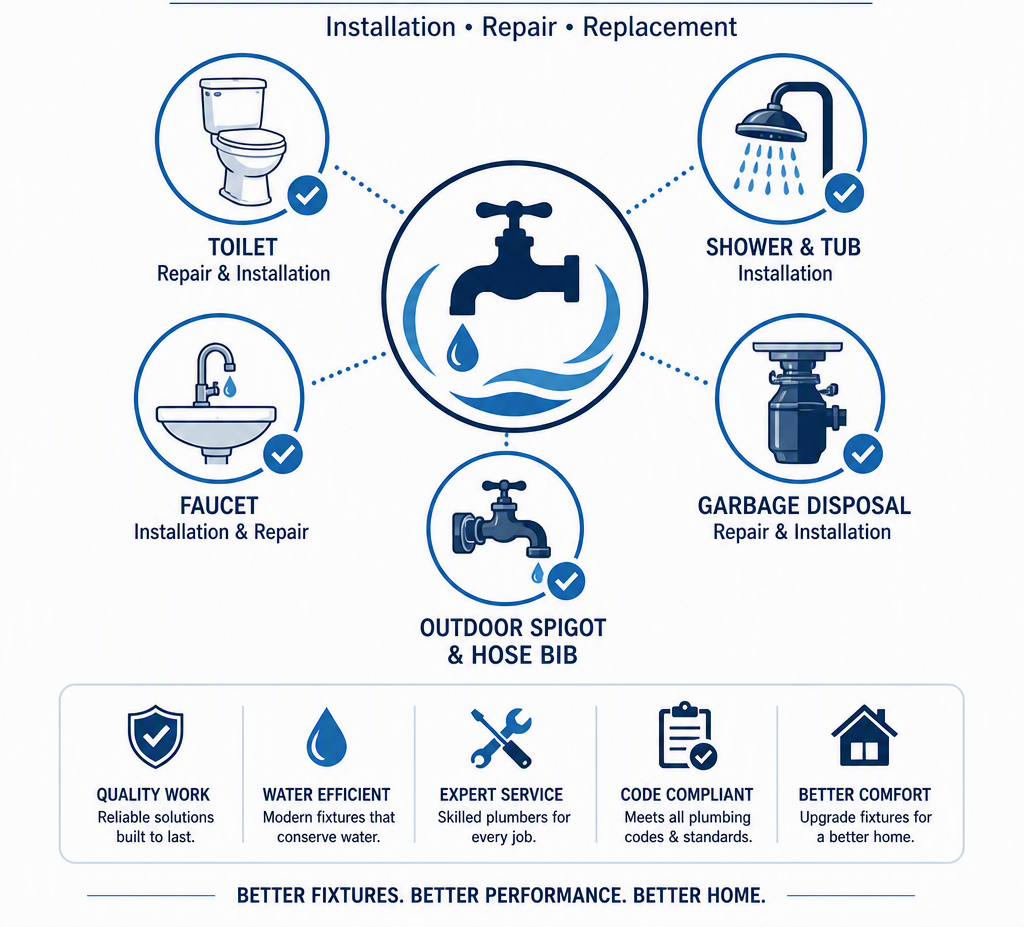
Plumbing fixtures are the devices in a building that deliver and remove water for everyday use. They connect directly to the plumbing system and include items people interact with daily, such as faucets, sinks, toilets, bathtubs, showers, bidets, urinals, drinking fountains, and floor drains.
Key considerations include proper water supply and drainage connections, correct venting and trap installation to prevent sewer gas, and choosing durable materials like porcelain, stainless steel, brass, or plastics. Fixtures must meet plumbing codes for safety and water efficiency, and they come in various installation styles (wall‑mounted, drop‑in, pedestal, under‑mount, floor‑mounted). Modern fixtures often incorporate low‑flow or dual‑flush features to reduce water use.
Understanding fixture types and requirements helps with renovations, diagnosing issues like leaks or clogs, and selecting replacements that meet code and efficiency standards.
PIPES AND WATER LINES
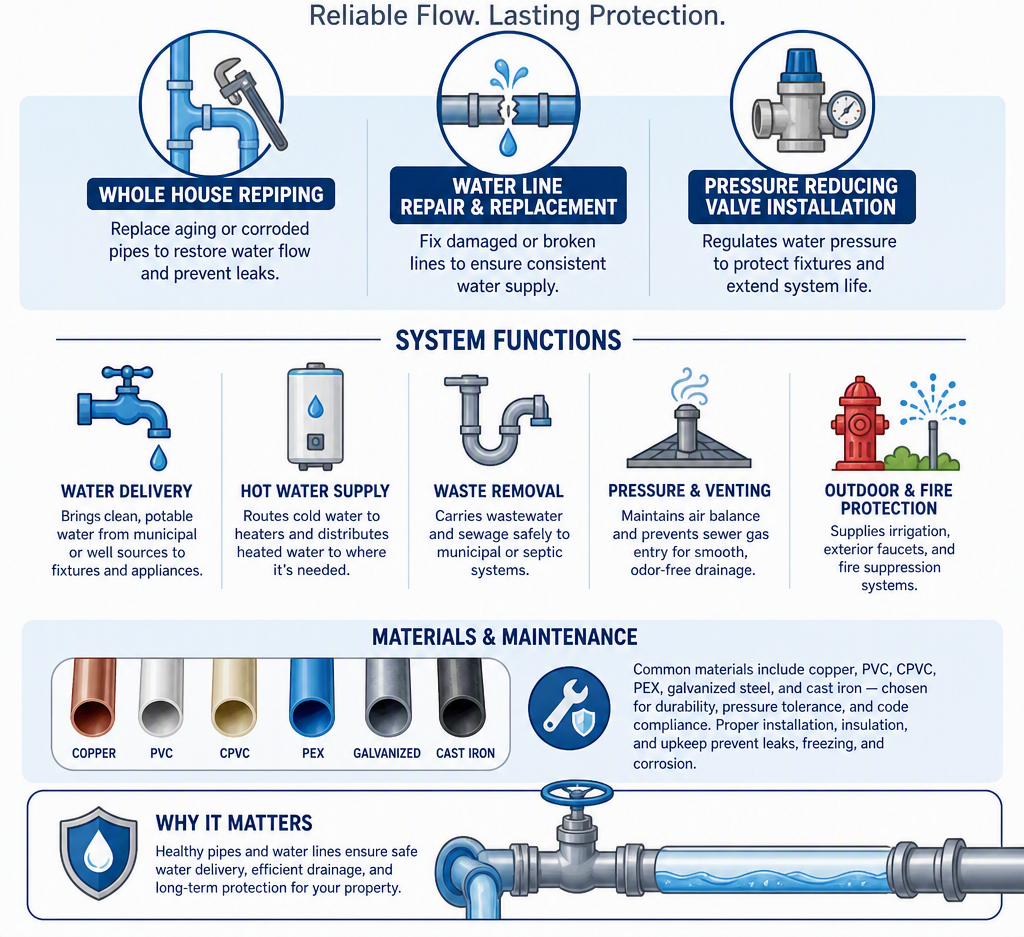
Pipes and water lines form the backbone of a plumbing system, moving water into, through, and out of a building. They deliver potable water from municipal or well sources, supply hot water through the water heater, remove wastewater via drain and sewer lines, and maintain proper pressure and venting to keep drains flowing and prevent sewer gas.
They also support outdoor uses like irrigation and pools, feed fire‑protection systems, and connect to devices that regulate and protect the water supply, such as meters, backflow preventers, and pressure‑reducing valves.
Common materials include copper, PVC, CPVC, PEX, galvanized steel, and cast iron—each chosen for durability, pressure tolerance, temperature needs, and code compliance. Proper installation, insulation, and maintenance are essential to prevent leaks, freezing, contamination, and blockages.
DRAIN SERVICES
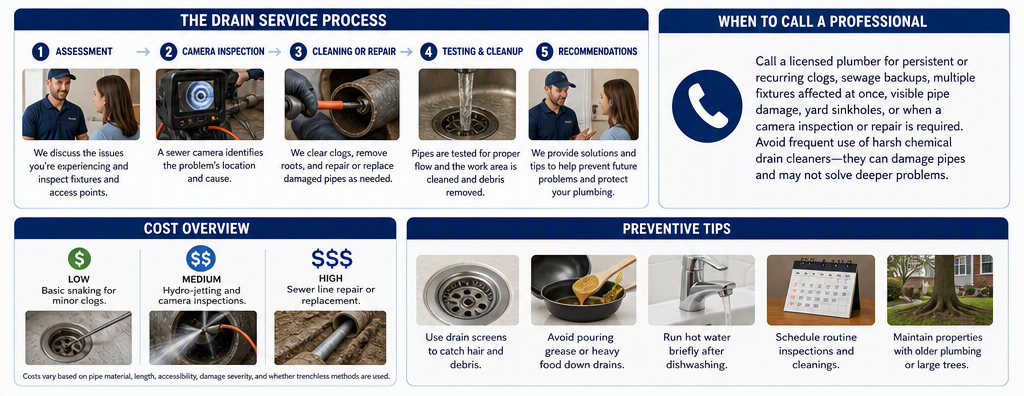
Drain services keep residential and commercial drain systems clear, functional, and free of damage. They address issues like slow drains, clogs, foul odors, backups, leaks, and sewer‑line problems. Core services include drain cleaning, clog removal, camera inspections, sewer‑line repair or replacement, root removal, grease‑trap maintenance, preventive cleaning, and emergency response for major backups.
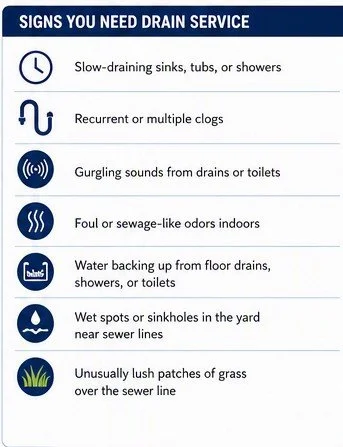
Common signs you need drain service include slow drainage, recurring clogs, gurgling noises, sewage odors, water backing up, or wet/sunken areas in the yard over sewer lines. A typical service visit involves diagnosing the issue, performing camera inspection if needed, clearing or repairing the line, testing flow, cleaning up, and offering preventive recommendations.
Professional help is necessary for persistent clogs, sewage backups, multiple fixtures affected at once, visible pipe damage, or yard sinkholes. Costs range from low (basic snaking) to high (sewer‑line repair), depending on pipe material, damage severity, accessibility, and whether trenchless methods are used.
Preventive care—like using drain screens, avoiding grease disposal, flushing drains with hot water, and scheduling routine inspections—helps protect plumbing systems, prevent health hazards, and avoid expensive emergency repairs.
SEWER SERVICE
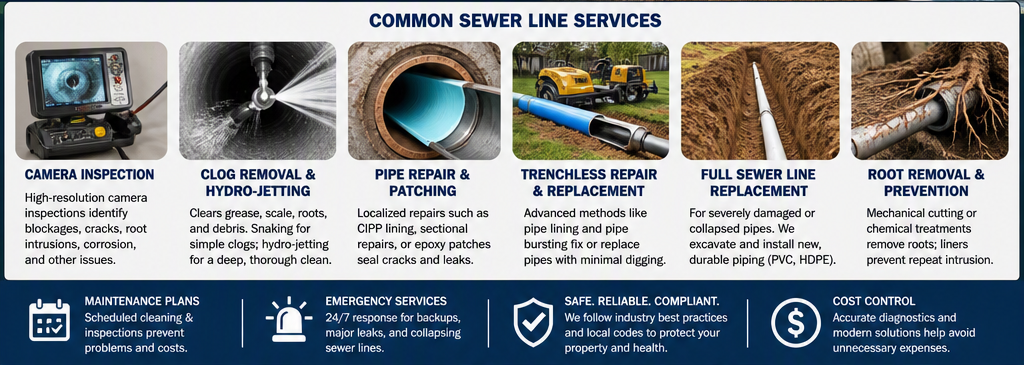
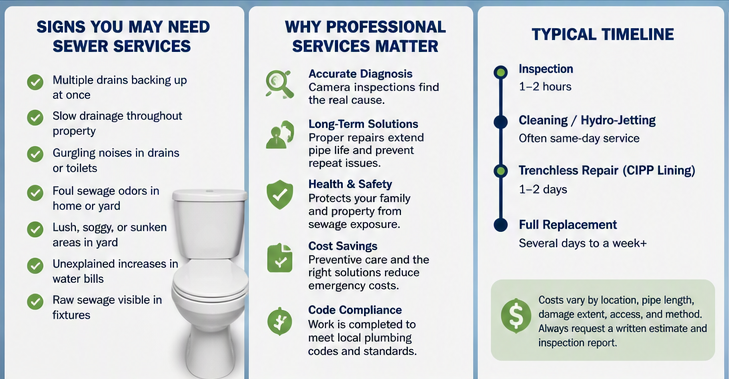
Sewer line services focus on inspecting, cleaning, repairing, and replacing the underground pipes that carry wastewater from a property to the city sewer or a septic system. These services protect flow, sanitation, and property safety, and include both preventive maintenance and emergency response.
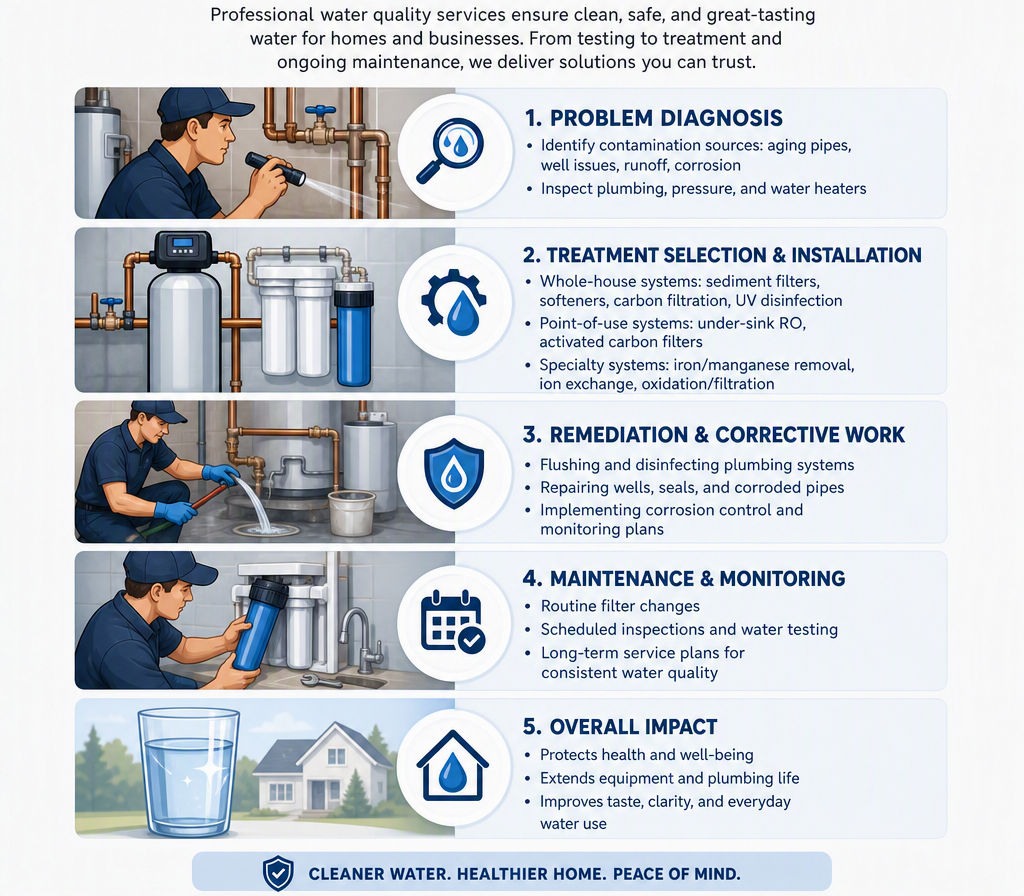
Water quality services focus on ensuring clean, safe, and great‑tasting water for residential, commercial, and industrial customers. These services include testing, treatment, and maintenance to meet health standards and protect plumbing systems.
Benefits
Reliable water quality services improve health, extend equipment life, and enhance everyday water use — from drinking to cleaning and bathing.
WATER QUALITY SERVICES
WATER HEATER SERVICES
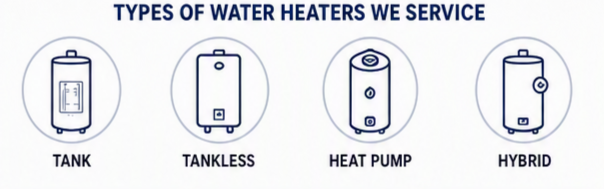
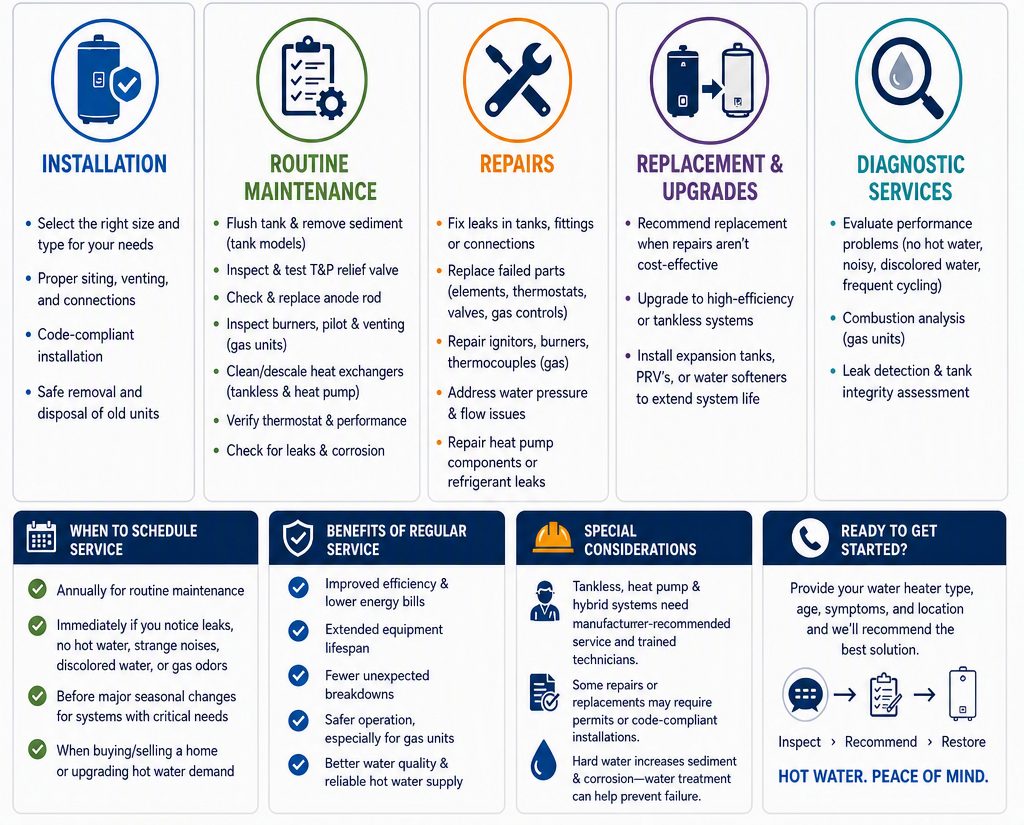
Regular water heater service ensures safety, efficiency, and comfort. Whether installing a new system or maintaining an existing one, professional care helps homeowners avoid costly repairs and maintain reliable hot water year-round.
GAS LINE SERVICE
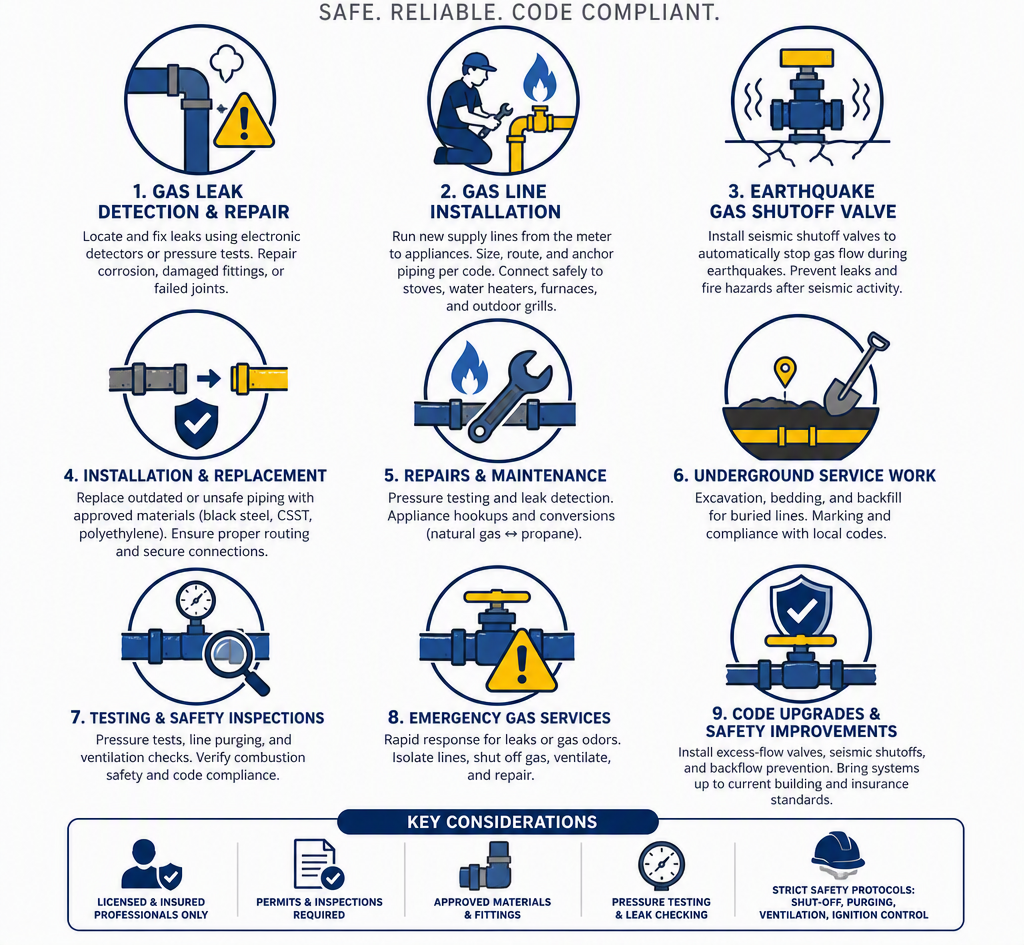
A gas line service covers any work performed on the piping system that delivers natural gas or propane from the utility meter or tank to appliances and fixtures throughout a property. This includes installation, repair, replacement, inspection, testing, maintenance, and safety upgrades. Because gas systems carry serious risks—leaks, fire hazards, explosions, and carbon monoxide exposure—all work must be performed by trained, licensed professionals.
When to Call a Professional
Knowing when to bring in a licensed gas technician is critical for safety. You should contact a professional immediately if you notice any of the following:
You smell gas (rotten‑egg odor) or suspect a leak.
You’re installing new gas appliances or relocating existing ones.
You hear hissing from gas lines or see dead vegetation above underground piping.
You’re buying or renovating a home and need gas line inspections or upgrades.
You need a code‑compliant installation, permit, or safety verification.